
Day: March 26, 2026
COSTA DEL SOL — BUYING GUIDE
NIE Numbers, Notaries & Notarial Deeds: Everything You Need to Know Before You Buy
Your Expert Guide to Living and Investing on the Costa del Sol


Ask anyone who has bought a property in Spain what surprised them most about the process, and the same themes tend to emerge. Not the complexity — Spain’s property purchase system is, in fact, well-structured and legally robust. What surprises buyers most is the unfamiliarity: a cast of legal characters and procedural steps that simply do not exist in the same form in the UK, Ireland or Northern Europe.
Three elements in particular tend to generate the most questions: the NIE number, the role of the Notario, and the Notarial Deed (Escritura). Understanding each of them clearly — what they are, why they exist, and what they mean for you as a buyer — will make the entire process feel considerably less foreign and considerably more manageable.
This article addresses all three in depth, so that when the moment comes, you are not encountering them for the first time.
The NIE Number: Your Gateway to Everything
The NIE — Número de Identificación de Extranjero, or Foreigner’s Identification Number — is a unique tax identification number issued by the Spanish government to any non-Spanish national who needs to conduct legal or financial activity in Spain. It is, in the most practical sense, the key that unlocks everything else in the purchase process.
Without a NIE, you cannot sign a purchase contract. You cannot open a Spanish bank account. You cannot register a property in your name. You cannot, in short, buy a property in Spain. This is why obtaining your NIE is the very first practical step, and why we always advise buyers to begin the process as early as possible — ideally before they have even identified a specific property.
How to Obtain Your NIE
There are two routes to obtaining a NIE. The first is to apply in person at a Spanish consulate in your country of residence. This is typically the most convenient option for buyers who have not yet made the move to Spain. You will need to complete the application form (Modelo EX-15), provide your original passport and a photocopy, a completed Modelo 790 fee form, and documentation demonstrating the reason for your application — in the case of a property purchase, a letter from your lawyer or estate agent confirming your intention to buy.
The second route is to apply in person at a National Police station (Comisaría) in Spain, specifically at the Foreigners’ Department (Oficina de Extranjería). This route is viable if you are in Spain at the time of application and can take less time than applying from abroad.
The third — and for many international buyers the most practical — option is to appoint a lawyer in Spain who can obtain the NIE on your behalf via a Power of Attorney (Poder Notarial). You grant your lawyer limited legal authority to make the application in your name, which removes the requirement for you to be physically present in Spain. This is a well-established, entirely routine process and one your lawyer will have navigated many times before.
The Notario: Impartial Guardian of the Process
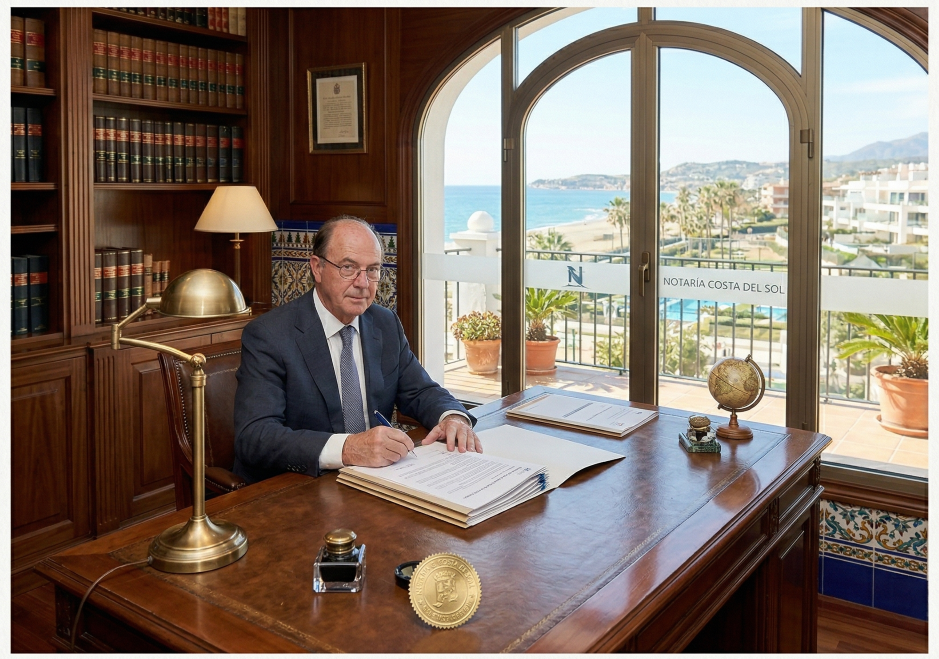
The Notario (Notary Public) is one of the most important figures in Spanish property law — and one of the most commonly misunderstood by international buyers. In Spain, notaries are senior legal professionals appointed directly by the Spanish state. They are not private practitioners in the conventional sense: they hold public office, and their role is to act as an impartial guarantor of the legal process, not as an advocate for either party.
The notary’s involvement in a property transaction is mandatory. No sale of real estate in Spain is legally complete without the buyer and seller appearing before a notary to execute the deed of sale. This requirement exists precisely because the notary’s role is protective: they verify the identity of the parties, confirm that the terms of the transaction are lawful and correctly documented, and ensure that both parties understand what they are signing.
What the notary does not do is conduct due diligence on your behalf. They will not check whether the property has outstanding debts, verify planning permissions, or advise you on whether the price is fair. That is the role of your independent lawyer, and it underscores why having your own legal representation — separate from the notary — is so important.
Notaries in Spain are distributed across every town and city. Your lawyer will typically recommend a notary they work with regularly, which is perfectly normal and entirely appropriate. The key point is that the notary’s impartiality is a matter of professional obligation, not personal relationship.
The Escritura: The Document That Makes It Real
The Escritura de Compraventa — literally, the Deed of Purchase and Sale — is the formal notarial document by which ownership of a property legally transfers from seller to buyer in Spain. It is, in the simplest terms, the Spanish equivalent of the completion documents you would sign at a conveyancing solicitor’s office in the UK or Ireland — but executed in a very different setting, with a very different weight.
The escritura is prepared by the notary in advance of the completion appointment. It sets out, in formal legal language, the full terms of the transaction: the identities of the parties, the description of the property and its registration details, the agreed purchase price, confirmation of the method of payment, and any conditions applicable to the transfer.
At the completion meeting, the notary will read the escritura aloud in its entirety — or summarise the key points where the document is lengthy — before both parties sign. If either party does not speak Spanish, an official interpreter must be present or the deed must be provided in a bilingual format. Your lawyer will ensure that this is properly arranged.
After the Escritura: Registration and Taxes
Signing the escritura is the moment of completion, but it is not quite the end of the process. Following completion, your lawyer will present the escritura to the Land Registry (Registro de la Propiedad) for registration in your name. This is a critical step: while the escritura itself constitutes legal proof of ownership, registration at the Land Registry provides public legal protection — formally establishing your title and protecting you against any subsequent claims on the property.
Simultaneously, your lawyer will arrange payment of the applicable purchase taxes. For resale properties in Andalucía, this is Transfer Tax (Impuesto de Transmisiones Patrimoniales) at 7% of the declared purchase price. For new-build properties, the applicable taxes are VAT (IVA) at 10%, plus Stamp Duty (Actos Jurídicos Documentados, or AJD) at 1.2%.
Both registration and tax payment have legally prescribed deadlines, and your lawyer will manage both to ensure you remain fully compliant and your title is protected from day one.
A Note on Powers of Attorney
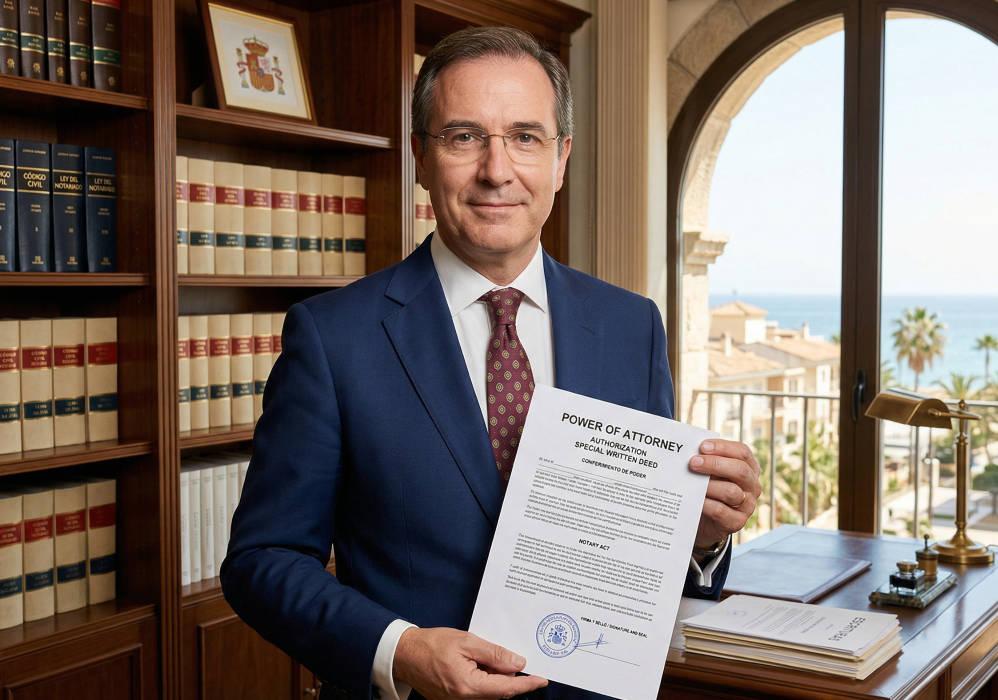
Many international buyers — particularly those purchasing from abroad and unable to be present in Spain at every stage — choose to grant their lawyer a comprehensive Power of Attorney (Poder Notarial). This is a notarially certified legal authority that allows your lawyer to act on your behalf at key points in the transaction, up to and including the completion itself.
A Power of Attorney does not diminish your control over the transaction. Your lawyer acts strictly within the scope of the authority you grant them, and you remain fully informed and in control at every stage. It is simply a practical tool that removes the requirement for you to be physically present in Spain at each step — a significant convenience for buyers based in the UK, Ireland, Scandinavia or elsewhere in Northern Europe.
The Power of Attorney itself must be executed before a notary — either in Spain, or at a Spanish consulate in your country of residence, or before a local notary with an apostille certification. Your lawyer will advise on the most appropriate route.
The Bigger Picture
Spain’s system of notaries, escrituras and NIE numbers may feel unfamiliar at first, but it is important to recognise that it exists for good reason: to provide legal certainty, to protect both parties in a transaction, and to ensure that property ownership in Spain is properly documented and publicly registered.
Once you understand the architecture of the system — and have the right advisors around you to navigate it — the process is not only manageable but reassuring. You are buying in a mature, well-regulated legal environment with genuine protections in place.
And on the other side of that process is a home on the Costa del Sol. It is, by any measure, worth understanding it properly.
Thinking About Making the Move?
Our team of specialist advisors has been helping international buyers find their perfect home on the Costa del Sol for 15 years. Whether you are at the early stages of research or ready to view, we would love to hear from you.
T: +34 951 177 422 E: info@mosaicrealty.es W: www.mosaicrealty.es
COSTA DEL SOL — BUYING GUIDE
The Complete Foreign Buyer’s Guide to Purchasing Property in Spain
Your Expert Guide to Living and Investing on the Costa del Sol

There is a particular kind of clarity that comes to people who have decided — really decided — to buy a property in Spain. The noise of the decision fades, replaced by something quieter and more purposeful: the desire to understand the process, to get it right, and to move forward with confidence. If you have reached that point, this guide is written for you.
Buying property in Spain as a foreign national is entirely straightforward — thousands of international buyers complete the process every year, many of them on the Costa del Sol. But like any significant transaction in an unfamiliar legal system, it rewards preparation. The buyers who navigate it most smoothly are those who understand the steps before they take them.
What follows is a comprehensive, honest and practical guide to the entire process — from your first viewing to the moment you receive the keys to your new home.
Step One: Obtaining Your NIE Number
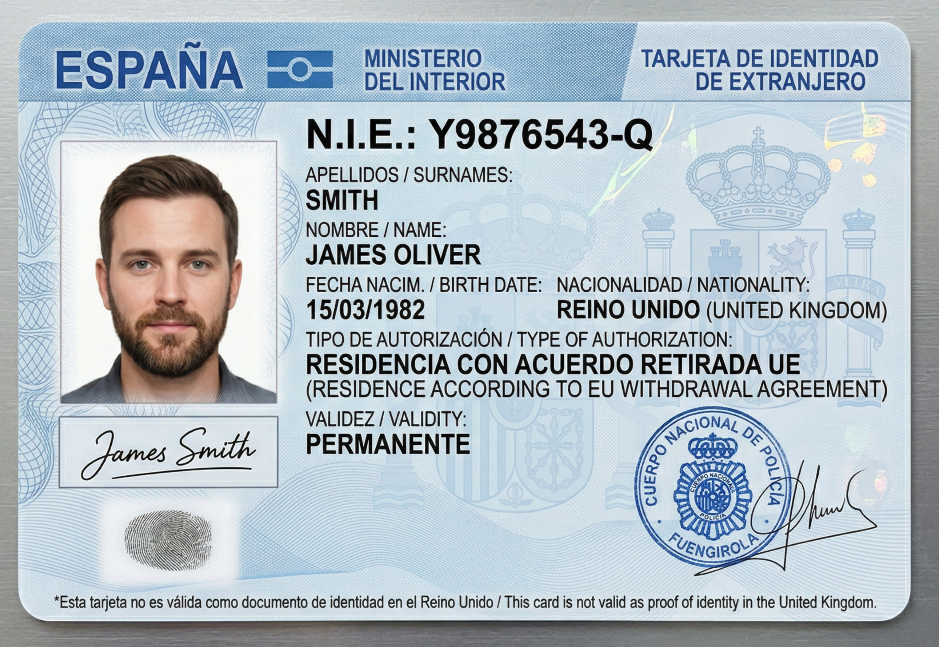
Before you can do anything of legal substance in Spain — including signing a purchase contract or opening a bank account — you will need a NIE number (Número de Identificación de Extranjero). This is your Spanish tax identification number, and it is the foundation upon which your entire purchase rests.
A NIE can be obtained in person at a Spanish consulate in your home country, or at a National Police station (Comisaría) in Spain. The process requires a completed application form (Modelo EX-15), your passport, and a small fee. Many buyers choose to appoint a local lawyer to obtain their NIE on their behalf via a power of attorney — a practical option if you are not yet resident in Spain and wish to move quickly.
Do not underestimate the importance of getting this done early. It is a simple step, but without it, nothing else can proceed.
Step Two: Appointing a Lawyer
Spanish property law is distinct from that of the UK, Ireland and Northern Europe in a number of important ways. While it is technically possible to proceed without independent legal representation, we would never recommend it. Your lawyer is not an optional extra — they are your most important investment in the entire transaction.
A good Spanish property lawyer will conduct thorough due diligence on your behalf: verifying that the property is correctly registered at the Registro de la Propiedad (Land Registry), checking for any outstanding debts or charges on the property, reviewing planning permissions and legal status, and ensuring that the title is clean and transferable. They will also review every contract before you sign and represent your interests at every stage, including at the notary.
Choose a lawyer who is independent of the developer or estate agent and who has demonstrable experience in Spanish property transactions. Many international buyers choose a bilingual lawyer — someone who can communicate fluently in both Spanish and English, ensuring that nothing is lost in translation at a critical moment.
Step Three: Opening a Spanish Bank Account
You will need a Spanish bank account to complete your purchase. All funds — your deposit, your stage payments if buying off-plan, and your final completion payment — must be transferred through a Spanish account. Your bank will also be the vehicle through which you pay your ongoing expenses: utility bills, community fees, property taxes, and so on.
Opening an account is straightforward for non-residents. Most major Spanish banks have English-speaking staff in their Costa del Sol branches, and the process typically requires only your passport, your NIE, and proof of address from your home country. Your lawyer can advise on the most convenient options for your particular circumstances.
Step Four: The Reservation Agreement and Deposit
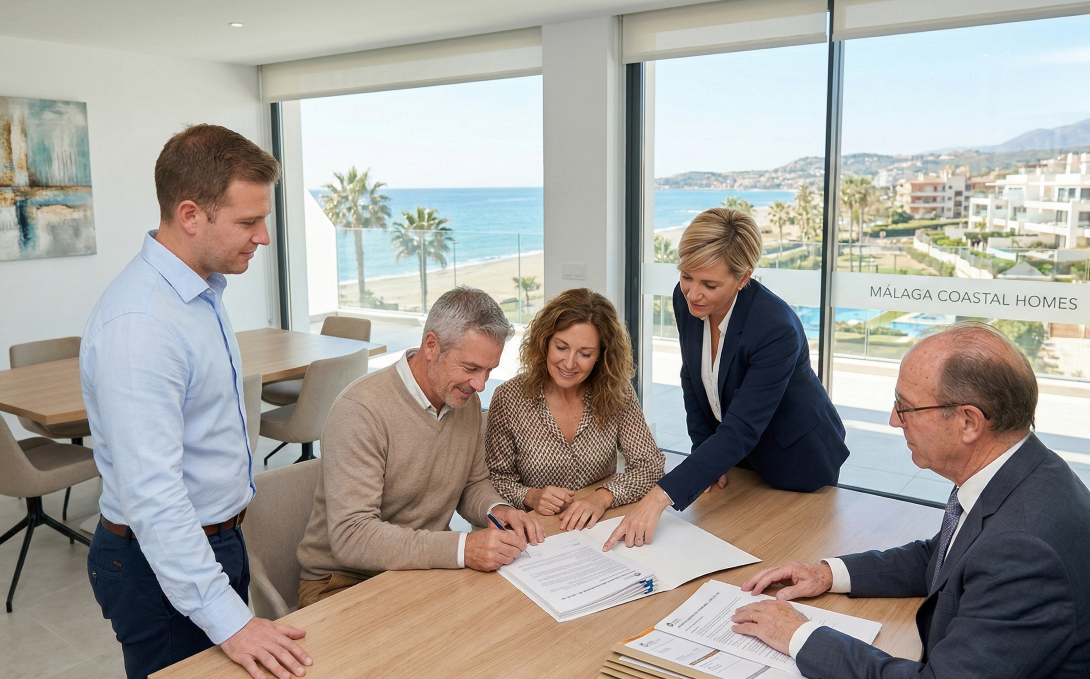
Once you have found your property and agreed a price in principle, the first formal step is typically a Reservation Agreement (Contrato de Reserva). This is a short document that takes the property off the market in exchange for a reservation deposit — usually between €3,000 and €10,000, depending on the property and the seller.
The reservation deposit is deducted from the final purchase price, but it is important to understand the conditions under which it is refundable — or not. Your lawyer should review the reservation agreement before you sign and ensure that your interests are properly protected.
Step Five: The Private Purchase Contract
The Contrato de Compraventa (Private Purchase Contract) is the substantive legal agreement between buyer and seller. This is the document that commits both parties to the transaction on the agreed terms: price, payment schedule (in the case of off-plan purchases), completion date, and any conditions or special clauses.
At the point of signing the private purchase contract, the buyer typically pays a deposit of 10% of the purchase price (less any reservation fee already paid). Under Spanish law, this deposit operates on a penalty basis: if the buyer withdraws without legal cause, they lose the deposit; if the seller withdraws, they must return the deposit doubled. Your lawyer will explain the specific terms in detail.
Step Six: Due Diligence
Between the private purchase contract and completion, your lawyer will conduct a comprehensive programme of due diligence. This is where the value of good legal representation is most clearly felt.
Key checks include: confirming clear title at the Land Registry; verifying that there are no debts, mortgages or encumbrances registered against the property; confirming that all community fees and local property taxes (IBI) are up to date; checking that the property has valid planning permissions and, where applicable, a first occupation licence (Licencia de Primera Ocupación); and reviewing any community statutes if the property forms part of an urbanisation or residential complex.
For new-build or off-plan properties, your lawyer will additionally verify that the developer holds all necessary licences, that your stage payments are protected by a bank guarantee, and that the building specification is accurately reflected in the contract.
Step Seven: Arranging Finance
If you require a mortgage to complete your purchase, it is essential to begin the process early. Non-resident buyers can obtain Spanish mortgages, though the terms differ from those available to residents — most notably in the loan-to-value ratio, which is typically capped at 60–70% for non-residents compared to up to 80% for residents.
Spanish lenders will assess your income, your existing financial commitments, and the independent valuation of the property. Processing times can vary, and a mortgage offer is generally required before a completion date can be confirmed. We work closely with experienced independent mortgage brokers who specialise in non-resident finance and can guide you to the most competitive products available in the current market.
Step Eight: Completion at the Notary
Completion in Spain takes place in the presence of a Notario — a public official appointed by the Spanish state whose role is to verify the identity of the parties, confirm the terms of the transaction, and ensure that the deed of sale (Escritura de Compraventa) is executed correctly. The notary is impartial: they represent neither buyer nor seller, but the integrity of the legal process itself.
At completion, the buyer pays the balance of the purchase price (typically by bank transfer or certified bank cheque), the notary reads and certifies the escritura, and ownership formally transfers. You will leave the notary’s office with a copy of the signed deed — and the keys to your new home.
Step Nine: Post-Completion Obligations
Completion is not quite the final step. In the weeks that follow, your lawyer will register the escritura at the Land Registry in your name — a critical step that formally establishes your legal ownership. They will also handle the payment of the relevant purchase taxes: Transfer Tax (Impuesto de Transmisiones Patrimoniales) on resale properties, or VAT (IVA) plus Stamp Duty (AJD) on new-build properties.
Once registration is complete, you will need to set up your utility accounts, register with the local municipality if you intend to be a resident, and ensure that any ongoing taxes — particularly the annual IBI (local property tax) — are correctly set up in your name.
The Costs You Should Anticipate
The total acquisition costs for a property purchase in Spain typically amount to between 10% and 13% of the purchase price, depending on the region and the type of property. These costs include purchase taxes (Transfer Tax at 7% for resale properties in Andalucía, or IVA at 10% plus AJD at 1.2% for new builds), Notary fees, Land Registry fees, and legal fees. Your lawyer and agent will provide you with a detailed cost estimate at the outset so that there are no surprises.
A Final Word
The Spanish property purchase process, approached with the right team around you, is genuinely manageable — and ultimately, deeply rewarding. The complexities exist not to deter buyers but to protect them, and the legal framework, when properly navigated, provides real security.
What matters most is choosing your advisors wisely: a good agent who knows the market, a good lawyer who knows the law, and a good broker who knows the finance. Get those three right, and the rest follows.
Thinking About Making the Move?
Our team of specialist advisors has been helping international buyers find their perfect home on the Costa del Sol for 15 years. Whether you are at the early stages of research or ready to view, we would love to hear from you.
T: +34 951 177 422 E: info@mosaicrealty.es W: www.mosaicrealty.es